
_1.svg?language=en-us)
_1.svg?language=en-us)
_1.svg?language=en-us)
_1.svg?language=en-us)





A New Era of Airport ID: REAL ID, Digital IDs & Mobile Passport Apps Explained
In the early days of aviation, just about anybody could get on a plane and fly wherever they wanted. However, a rise in air violence (including hijackings) forced airlines to demand identification forms or IDs from their passengers, such as driver’s licenses, passports, and permanent resident cards.
For decades, that’s how it stayed until 9/11. After that horrifying incident, Congress passed the REAL ID Act (2005) and, since May 2025, has required enhanced and digital identification cards at many federal facilities. They’re also usable in a vast number of commercial and residential flights.
Furthermore, an increasing demand for tools like a digital ID for air travel and a mobile passport app has helped make these tools a reality. It also improves airport security because digital IDs are far harder to fake, making it easier to keep the wrong people off your plane when you fly.
This change could revolutionize the industry and make it easier for you to navigate busy summer trips, plan a summer vacation, or even hit up Europe for a big train adventure. It’s never been easier to fly, though it’s still easy to get confused about the differences between REAL ID vs digital ID cards and how to use them.
Thankfully, The Parking Spot is here to help you understand this complex topic! We’ll walk you through TSA ID requirements, digital driver’s license travel tips, how facial recognition airport security tools streamline your experience, and dive deep into the future of travel ID with you.
What IDs Are Currently Accepted for Air Travel?
Before we discuss your mobile passport app options, analyze the best digital ID for air travel, or debate REAL ID vs digital ID, let’s define the traditional ID options available when flying for business and pleasure, including Christmas vacations. They include:
- State-issued Enhanced Driver’s Licenses (EDL) or Enhanced IDs (EID)
- U.S. passports
- U.S. passport cards
- DHS-trusted traveler cards (Global Entry, NEXUS, SENTRI, FAST, etc.)
- Border crossing cards
- Permanent resident cards
- HSPD-12 PIV cards
- Foreign government-issued passports
- Photo IDs from federally recognized native tribes
- Transportation Worker Identification Credentials (TWIC)
- Canadian provincial driver’s license
- Indian and Northern Affairs Canada cards
- U.S. Merchant Mariner Credential
- Veteran Health Identification Card VHIC
- U.S. Citizenship and Immigration Services Employment Authorization Cards (I-766)
REAL ID: A Deep Dive Into This Important Subject
As of May 7, 2025, any state-issued driver’s license or any IDs that aren’t REAL ID-compliant are not accepted as valid in American airports. While passports are still acceptable, all paper-based documents must follow REAL ID guidelines. Otherwise, you’ll be subjected to extensive and frustrating screening processes.
Since we’re going to discuss REAL ID vs digital ID, the importance of mobile passport app tools, and your options for a digital ID for air travel (and the implications of AI on travel in general) in a moment, we won’t dwell too long on this topic. Just know you can no longer show up at an airport with your traditional driver’s license and expect to fly.
What Is a REAL ID? 
The REAL ID Act of 2005 established minimum security standards to help enhance state-issued driver’s licenses and ID cards. It prohibits federal agencies (including aviation companies) from accepting any identification that doesn’t meet strict requirements.
A REAL ID typically includes a small symbol that lets airlines know you meet all the minimum requirements for travel. How do you know if you’re compliant? If you haven’t gone through the following steps to verify your license, you are not compliant and must do so before flying:
- Visit your local DMV field office (make an appointment to streamline the process)
- Bring proof of identity (birth certificate, passport, permanent resident card, foreign passport with an approved form I-94, employment authorization document, etc.)
- Show your Social Security card, W-2, or paystub with your full Social Security number
- Offer a proof of residency document, such as a rental or mortgage agreement, utility bill, medical or school document, etc.
- Pay the fee required by your state
Note that states may vary slightly in their requirements. That’s critical to know before signing up for a REAL ID, a digital ID for air travel, or a mobile passport app. Just as importantly, you must know the difference between a REAL ID vs digital ID card to travel safely, whether you’re planning a solo adventure, going on a romantic trip, or finally hitting up Mardi Gras this year.
Digital Driver’s Licenses & Mobile IDs
While REAL ID is the new standard for plane travel, TSA ID requirements are constantly changing. In fact, digital driver’s travel is likely the future of travel ID. While still optional and in an early pilot stage in states like Arizona, Colorado, Louisiana, and Maryland, digital driver’s license travel tools will likely transform the market in huge ways very soon.
What is a Digital Driver’s License?
Since early 2022, the TSA has deployed several CAT-2 units to help with a phased rollout of digital ID for air travel options, including driver’s licenses. A digital driver’s license is easy to integrate with Apple or Google Wallets and lets you tap your app on a scanner for instant verification.
Currently available in about 250 airports, these tools, alongside new mobile passport app options (more on that later), have ignited a REAL ID vs digital ID debate. There’s a real fear that digital tools might completely replace paper options. Proponents argue the opposite, saying digital driver’s licenses are REAL ID-compliant, which they argue makes flying even easier for most.
The Pros and Cons of Digital Identification
If you’re still on the fence about using a digital ID for air travel, aren’t sure if a mobile passport app is right for you, or simply still debating REAL ID vs digital ID options, the following pros and cons should help you choose wisely and even avoid potential travel scams as well.
Benefits
- Highly convenient (just bring your phone and you can fly)
- Easy integration (used by Apple and Google Wallet)
- Designed for easy understanding (anyone can use them)
- Maximizes carry-on baggage room
Downsides
- They’re still not accepted everywhere (though acceptance is growing)
- Some might find them confusing
- Slight risks of potential hacks with these tools
Mobile Passport Control (MPC) App
The MPC is a free mobile passport app that lets eligible travelers submit all their travel information and customs declarations electronically. When used properly, it helps cut back on waiting times and can reduce your time spent in the airport, which is perfect for those days when you’re just waiting around.
It’s important to note that MPC is NOT a passport replacement. You’ll still need to apply for and receive a physical passport to use this application. Instead, it’s simply a CBP-approved application that you can use to speed up your travel times. If you’re not certain about using this type of digital ID for air travel, talk with your airline to avoid confusion.
Digital vs. Traditional ID: Pros and Pitfalls
Before signing up for a digital ID for air travel or downloading the mobile passport app, pay close attention to the benefits and downsides of these powerful tools:
Pros of Digital Identification
- Very convenient compared to physical IDs
- Relatively secure (harder to steal)
- Increasingly accepted nationwide
Cons of Using Digital IDs
- Potential technical limitations could impact acceptance
- Concern over privacy, such as hacking dangers
- Acceptance may vary based on airport infrastructure
Where Are These Accepted?
Currently, these airports are accepting digital ID for AI travel:
- Phoenix Sky Harbor International Airport (PHX)
- Los Angeles International Airport (LAX)
- Mineta San Jose International Airport (SJC)
- San Francisco International Airport (SFO)
- Denver International Airport (DEN)
- Miami International Airport (MIA)
- Hartsfield-Jackson Atlanta International Airport (ATL)
- Honolulu Daniel K. Inouye International Airport (HNL)
- Chicago O’Hare International Airport (ORD)
- Des Moines International Airport (DSM)
- Eastern Iowa Airport (CID)
- Cincinnati/Northern Kentucky International Airport (CVG)
- Louis Armstrong New Orleans International Airport (MSY)
- Baltimore/Washington International Thurgood Marshall Airport (BWI)
- Detroit Metropolitan Airport (DTW)
- Gulfport-Biloxi International Airport (GPT)
- Jackson-Medgar Wiley Evers International Airport (JAN)
- Las Vegas Harry Reid International Airport (LAS)
- John F. Kennedy International Airport (JFK)
- LaGuardia Airport (LGA)
- John Glenn Columbus International Airport (CMH)
- Will Rogers World Airport (OKC)
- San Juan’s Luis Muñoz Marín International Airport (SJU)
- Nashville International Airport (BNA)
- Dallas- Fort Worth International Airport (DFW)
- Salt Lake City International Airport (SLC)
- Richmond International Airport (RIC)
- Ronald Reagan Washington National Airport (DCA)
Airports That Accept MPC
Facilities that accept the mobile passport app MPC include:
- Atlanta Hartsfield-Jackson International Airport (ATL)
- Baltimore/Washington International Thurgood Marshall Airport (BWI)
- Boston Logan International Airport (BOS)
- Charlotte Douglas International Airport (CLT)
- Chicago O’Hare International Airport (ORD)
- Dallas/Fort Worth International Airport (DFW)
- Denver International Airport (DEN)
- Detroit Metropolitan Airport (DTW)
- Dulles International Airport (IAD)
- Fort Lauderdale-Hollywood International Airport (FLL)
- Honolulu Daniel K. Inouye International Airport (HNL)
- Houston George Bush Intercontinental Airport (IAH)
- Houston William P. Hobby International Airport (HOU)
- John F. Kennedy International Airport (JFK)
- Kansas City International Airport (MCI)
- Las Vegas Harry Reid International Airport (LAS)
- Los Angeles International Airport (LAX)
- Miami International Airport (MIA)
- Minneapolis-Saint Paul International Airport (MSP)
- Newark Liberty International Airport (EWR)
- Oakland International Airport (OAK)
- Orlando International Airport (MCO)
- Philadelphia International Airport (PHL)
- Phoenix Sky Harbor International Airport (PHX)
- Pittsburgh International Airport (PIT)
- Portland International Airport (PDX)
- Sacramento International Airport (SMF)
- Salt Lake City International Airport (SLC)
- San Diego International Airport (SAN)
- San Francisco International Airport (SFO)
- San Jose International Airport (SJC)
- San Juan Airport (SJU)
- Seattle-Tacoma International Airport (SEA)
- Tampa International Airport (TPA)
TSA PreCheck vs. Standard Screening Lanes
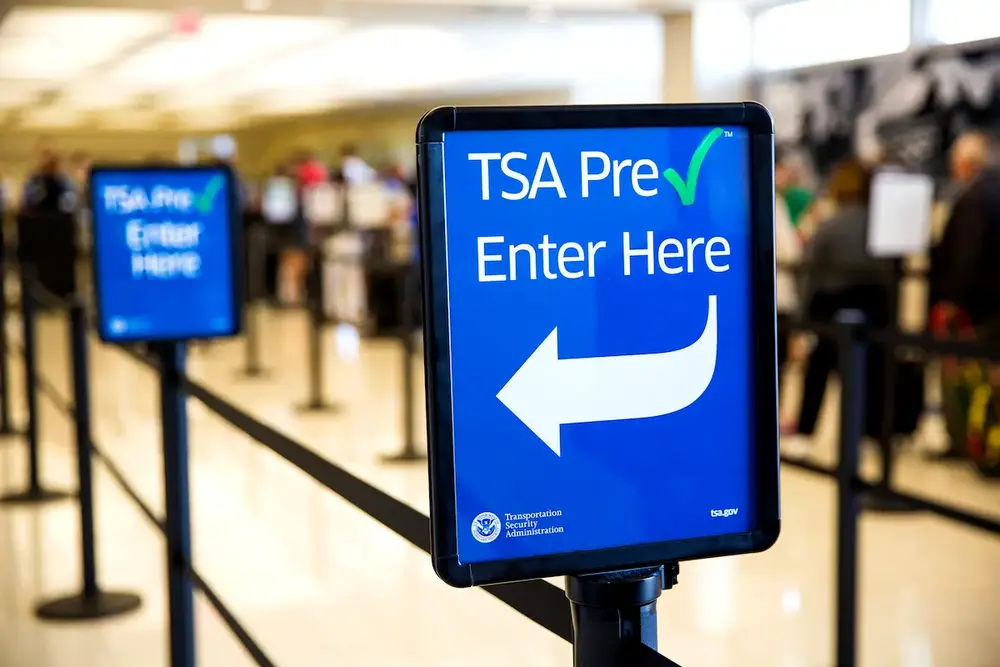
Many of the facilities utilizing digital tools have integrated them into TSA PreCheck and standard screening lanes. The former is particularly beneficial, as about 99% of all passengers here take less than 10 minutes to process, while standard lanes take 30 minutes or so. The increasing usage of digital and REAL ID tools will help cut back on these times even further.
Facial Recognition & Biometrics in Travel
Beyond using a digital ID for air travel or a mobile passport app lies facial recognition and biometrics. This unique process is used in TSA PreCheck and CBP to verify your identity quickly. It uses various high-tech tools that analyze your facial features and structure and compare them to previously saved images of your face. It works like this:
- Arrive at an airport and travel to the biometric terminal
- Get a picture taken of your face at this terminal
- Wait for the camera to quickly analyze your facial features
- Enter or exit the airport after your ID is verified
Airports typically use these tools for entry and exit through American airports. They’re also commonly used at various security checkpoints (usually PreCheck and Global Entry) and at TSA bag drop points. They provide many benefits and downsides, including:
Advantages
- Much faster boarding than other techniques
- Passport-free identity checks
- Powerful identity verification if you forget all your paperwork
Concerns
- Privacy concerns (your face is stored on record indefinitely)
- Availability of opt-out (some airports may not allow it)
- Errors in processing identity (rare but possible)
The Future of Travel Identification
When traveling through the busiest airports in the world, dealing with children on your trips, or traveling to dark and mysterious places, the future of travel identification looks bright, with proposed solutions (in various stages of prototyping), such as:
- AI-powered check-in and identity matching tools that check your identification quickly and accurately
- Real-time ID verification tools that include self-driven interfaces that ensure you process smoothly and efficiently
- Mobile-only check-in and boarding applications with digital ID and biometrics that also include much more secure and protected security guidelines
- IATA One ID concept to provide a frictionless, paperless, and contactless travel (still in the early working stages of implementation)
Tips for Travelers
If you plan on utilizing digital IDs for your travel, consider these tips to streamline the process:
- Call your airport and airline ahead of time to ensure your digital ID for air travel and mobile passport app are accepted
- Always use official apps, such as the MPS and state DMV app, to improve your acceptance rate
- Bring your physical IDs with you at all times, just to be safe (as hacking or even internet failure could make your digital one unusable)
- Enroll in TSA PreCheck or Global Entry to help improve your digital ID adoption (as these options help make it even easier to use them)
FAQs
Can I fly without a physical ID?
Yes, but only under specific circumstances. If your airport accepts digital IDs (like those in Apple Wallet or Google Wallet), and your ID is properly verified, you may be able to fly without a physical document. If you lack both physical and digital ID, TSA may allow travel after completing a detailed identity verification process, but this can be time-consuming and is not guaranteed.
What’s the difference between a REAL ID and a digital driver’s license?
A REAL ID is a federally compliant physical ID card with enhanced security features, required for certain domestic flights after May 7, 2025. A digital driver’s license is an electronic version stored on your smartphone. Some digital licenses are also REAL ID-compliant, but not all are accepted at every airport.
Will TSA accept Apple Wallet IDs?
Yes — at over 25 TSA-supported airports, digital IDs stored in Apple Wallet are accepted at designated security checkpoints. However, it’s strongly advised to carry a backup physical ID in case of tech issues or if a checkpoint doesn’t support digital verification.
Will TSA accept Google Wallet IDs?
Yes — select TSA checkpoints also accept digital IDs stored in Google Wallet for participating states like Maryland and Arizona. Always check your airport’s policy beforehand and bring a physical ID as backup in case digital acceptance is unavailable or fails.
Is facial recognition mandatory at airports?
No. Facial recognition is currently voluntary at most airports. TSA and CBP offer opt-out options, but you'll likely need to undergo a manual ID check instead.
Is Mobile Passport the same as Global Entry?
No. While both are designed to expedite re-entry to the U.S., Mobile Passport is a free app approved by CBP that allows faster customs processing, but it doesn’t include TSA PreCheck benefits. Global Entry is a paid, Trusted Traveler program that includes faster security and re-entry privileges.
Which states offer digital driver’s licenses?
As of now, states like Arizona, Colorado, Louisiana, and Maryland support digital driver’s licenses, with more states testing pilot programs. Check with your local DMV for availability and TSA acceptance.
Can I use a digital ID internationally?
Not yet. Digital IDs are currently accepted only at select U.S. airports for domestic travel. International travel still requires a valid physical passport.
What happens if my phone dies and I only have a digital ID?
You may be denied boarding or delayed at security. Always bring a physical backup ID when traveling, even if your digital ID is accepted at your departure airport.
Are digital IDs secure?
Yes, generally. Digital IDs use encrypted storage and biometric authentication (e.g., Face ID or fingerprint) to prevent unauthorized access. However, they are still vulnerable to technical failures, so physical backups are recommended.
Can children use digital IDs for air travel?
Currently, digital ID acceptance for minors is limited. Most TSA checkpoints still require a physical ID or no ID at all for children under 18 traveling with an adult.
The Parking Spot Understands the Future of Travel ID
Hopefully, this information about digital driver’s license travel, facial recognition airport security tools, and REAL ID usage cleared up all your confusion! It’s impossible to deny that we live in a digital world, and TSA ID requirements are likely to continue changing even more in the future.
Could there come a time when airports no longer accept paper IDs? Potentially, though not any time soon. As a result, you can’t simply hope that you can avoid using a digital ID for air travel or a mobile passport app. Instead, it’s time to embrace the future and all its future travel enhancements.
That said, while knowing about these topics is essential, finding plentiful parking at reasonable prices is also important. Using a digital ID for air travel and your mobile passport app is excellent, but you still need to find a place to put your car that won’t break the bank. Thankfully, The Parking Spot offers fairly priced options that meet your budget.
Sign up for our Spot Club membership to get exclusive discounts, or check out our coupons and deals section to learn even more. Whether you’re flying for business or pleasure, our reservations app will ensure you get the parking experience that you deserve.