
_1.svg?language=en-us)
_1.svg?language=en-us)
_1.svg?language=en-us)
_1.svg?language=en-us)
Pet Relief & Service Animal Areas at Houston Hobby Airport
The question usually hits somewhere around the security line: your dog needs to go, but you have no idea where the relief area is. At William P. Hobby Airport, you've got options on both sides of the checkpoint. There's an outdoor Service Animal Relief Area on Level 1 near Ground Transportation Zone 4 and the Red Garage, and an indoor post-security area on Level 2. Hobby is Houston's older, more compact airport, about seven miles from downtown and Southwest Airlines' main Houston base, and that compactness works in your favor when you're managing a leash, a carrier, and a boarding pass at the same time.
What Travelers Need to Know About Pet Relief at HOU Airport
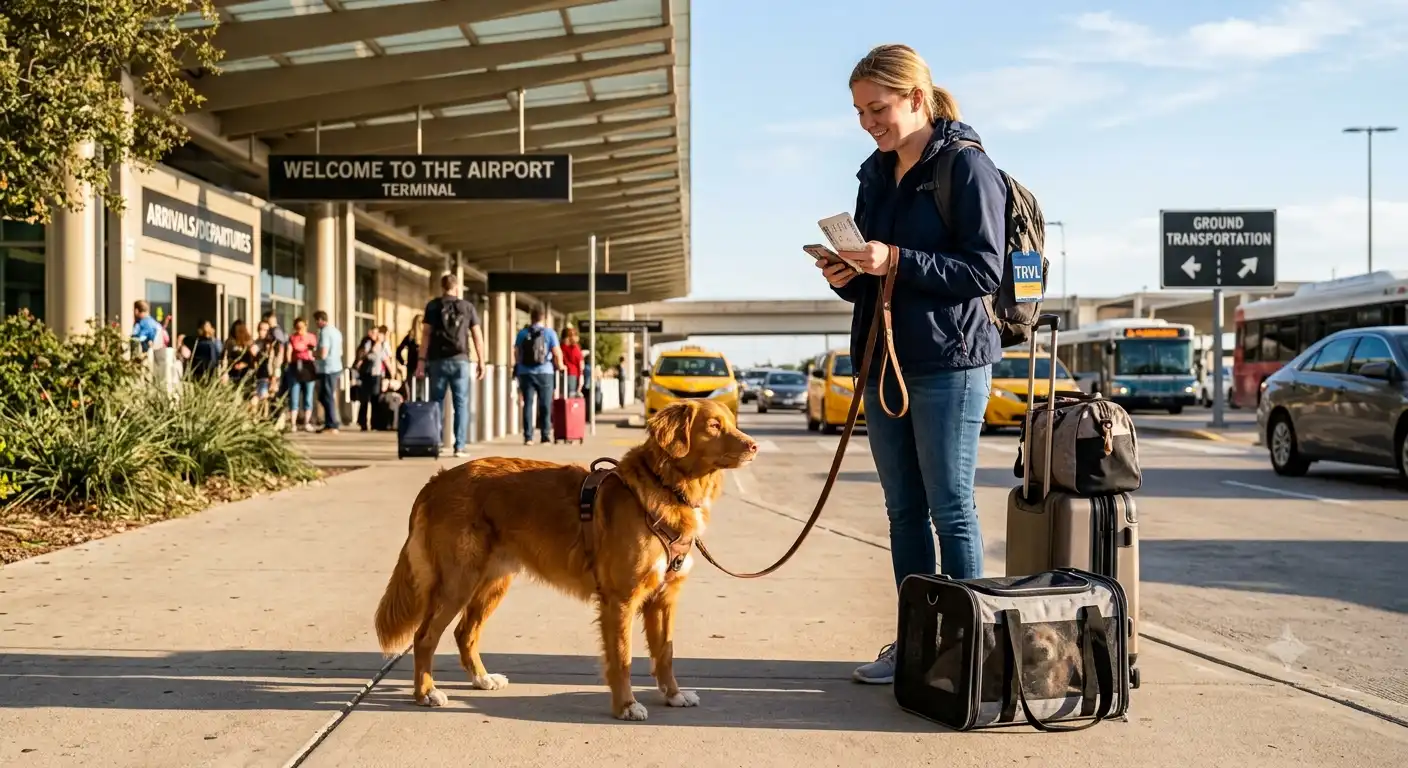
Hobby officially welcomes service animals and supports them with Service Animal Relief Areas throughout the terminal, and its rules draw a clear line: service animals may move through the airport on a leash, while all pets and emotional support animals must stay crated at all times inside the terminal. The airport frames the crating rule as protection for service animals and their handlers, so don't expect flexibility on it even if your dog is small and calm.
The relief areas are listed on the official Houston Airports services page alongside amenities like free Wi-Fi and information centers. That placement tells you something about how the airport views the service: animal relief is treated as a standard traveler amenity, not an afterthought. Houston Airports describes its broader approach as a commitment to a strong experience for travelers with disabilities, and the relief-area setup reflects that.
Because Hobby is the oldest commercial airport in the Houston area and functions as the region's secondary domestic airport, it's a single-terminal operation. That means shorter walks between the curb, the checkpoint, and the relief areas than you'd face at a sprawling hub. That's a genuine advantage when your animal is on a schedule your flight doesn't respect.
Where to Find the HOU Service Animal Relief Area (SARA)
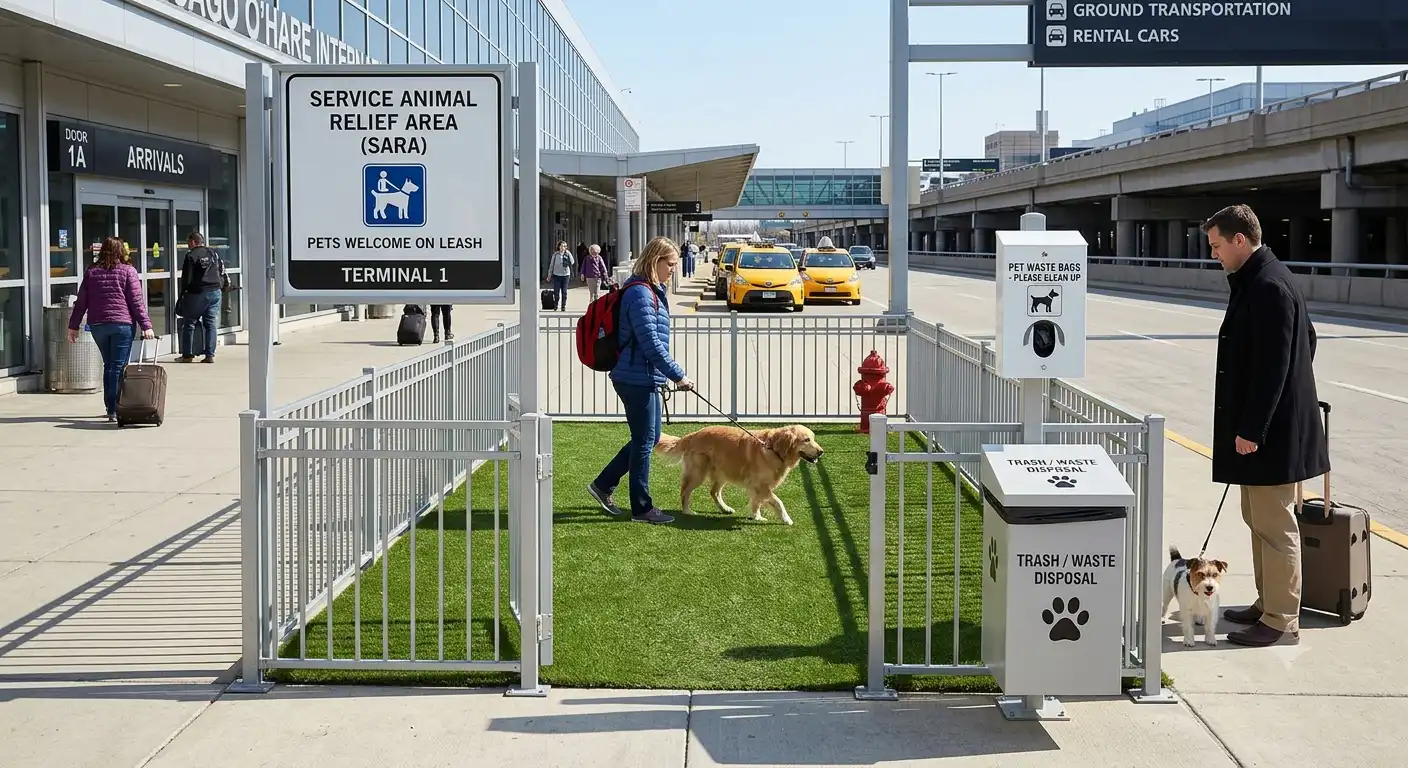
The primary Service Animal Relief Area sits outside on Level 1, near Ground Transportation Zone 4 and the Red Garage. It's pre-security and a short walk from the main terminal, which makes it the natural stop whether you're arriving on a flight, heading to the curb, or walking in from parking. Because it's outdoors and accessible before check-in, it's also the right first stop when you get to the airport. Let your dog go before you enter the terminal, and you buy yourself a much calmer trip through the checkpoint.
Past security, a pet-travel directory describes an indoor relief area on Level 2, with third-party sources placing it near Gate 20 and the CNBC Shop. Hobby's own service-dog page also notes a Service Animal Relief Area near Gate 44, across from the Interfaith Chapel, the same stretch of Level 2 where the airport's free little library sits. Having a relief option on each side of the checkpoint matters more than most first-time animal travelers realize: exiting security to relieve a dog means going through screening all over again.
If you can't find a relief area or the signage is unclear, Department of Transportation guidance says exactly what to do: ask any airport or airline employee for the nearest one. Multiple guides note the areas are typically stocked with waste bags and receptacles, but pack a spare bag in your carry-on anyway.
Rules for Pets vs. Service Animals at Houston Hobby Airport
The distinction at HOU comes down to leash versus crate. Service animals are allowed through the terminal on a leash. Pets and emotional support animals must remain in a carrier the entire time they're inside the building. The only exceptions for a pet are the relief area, where a dog may come out of the carrier but must stay securely leashed, and the security checkpoint, where TSA requires you to remove the pet for screening.
The federal definition drives all of this. Under the Air Carrier Access Act, a service animal is a dog, any breed, individually trained to do work or perform tasks for a person with a disability, whether physical, sensory, psychiatric, intellectual, or another mental disability. Service dogs are working animals, not pets, and they fly free with qualifying travelers.
Emotional support animals lost their special status when DOT revised its ACAA regulations, effective January 11, 2021. Providing comfort or companionship doesn't count as trained work or tasks under the rule, so airlines are no longer required to accommodate ESAs, and every major U.S. carrier has dropped recognition of them. At Hobby, that means an ESA follows standard pet policies: crated in the terminal, pet fees at the counter, and an old ESA letter won't get you anywhere. Airlines no longer accept them as valid documentation.
Tips for Navigating HOU With a Service Dog or Pet
Screening is where preparation pays off, and the process differs sharply depending on which side of the pet-versus-service-animal line you're on.
Going through security with a service dog
Tell the TSA officer you're traveling with a service animal. They won't separate you from your dog, and in standard and PreCheck lanes you'll both go through the walk-through metal detector. Keep the leash in your hand throughout screening. Collars, harnesses, vests, and backpacks are subject to screening, but you don't need to remove gear the dog needs for control. TSA recommends equipment with little to no metal to speed things along. Expect that additional screening may involve a visual inspection or pat-down, and your dog's food and medication go through X-ray or inspection like anything else.
One detail frequent handlers learn: if you exit the checkpoint to use the Level 1 relief area, you'll be rescreened, but you can ask to move to the front of the line when you return.
Going through security with a pet
Take the pet out of its carrier and send the empty carrier through the X-ray. Never the animal. Carry the pet or walk it on a leash through the metal detector, and expect officers to swab your hands for explosive trace detection. If your pet is skittish, request a private screening room. Afterward, walk to a re-composure area away from the checkpoint before putting the animal back in its carrier. Wrestling a cat back into a bag at the conveyor belt helps no one.
For questions before you fly, TSA Cares at (855) 787-2227 takes calls at least 72 hours ahead of travel, staffed weekdays 8 a.m. to 11 p.m. ET and weekends and holidays 9 a.m. to 8 p.m. ET.
Planning Your Full Trip Through HOU: From Parking to the Gate
Build your timeline around one extra stop: the outdoor Level 1 relief area before you check in. General guidance for Hobby is to arrive about two hours before a domestic departure and three hours before an international flight. With an animal in tow, you'll want additional buffer for the relief stop, the pet-fee transaction at the counter if you're flying with a pet, and slightly slower screening. Hobby's busiest windows run roughly 5–8 am and 4–7 pm, when security lines stretch longest. If your booking is flexible, a midday departure with a dog is noticeably easier.
If Southwest is your carrier, and at Hobby it usually is, small vaccinated domestic cats and dogs at least eight weeks old can fly in the cabin in an approved carrier for a pet fare paid in person at the ticket counter, while service dogs fly free. Southwest asks service-dog handlers to present the completed DOT form at the ticket counter or gate on the day of travel, dated on or after the ticket purchase. Fees and policies are subject to change, so verify current details on Southwest's official site before you fly.
For the rest of your trip logistics, including parking options, terminal layout, and ground transportation, The Parking Spot's HOU airport guide covers the airport end to end. Once you're through security, the companion pages on the HOU Central Concourse and the HOU West Concourse help you get oriented near your gate. And if you're facing a long connection with your animal, the guide to HOU layover activities is worth a look before you settle in.
Frequently Asked Questions
Where is the pet relief area at HOU airport?
The main relief area is outdoors on Level 1, near Ground Transportation Zone 4 and the Red Garage, before security. There's also an indoor post-security area on Level 2, which third-party sources place near Gate 20, and the airport's service-dog page notes a relief area near Gate 44 across from the Interfaith Chapel.
Can I bring my service dog through Houston Hobby Airport?
Yes. Service dogs are welcome at Hobby and supported through both TSA screening and airport facilities. Your dog can remain on a leash throughout the terminal, and under the Air Carrier Access Act, trained service dogs fly free with travelers who have qualifying disabilities.
Is the HOU service animal relief area located before or after security?
Both. Hobby has a relief option on each side of the checkpoint. The outdoor Level 1 area near Zone 4 and the Red Garage is pre-security, while the indoor Level 2 area sits past the checkpoint, so you won't need to exit and rescreen mid-trip.
Do I need documentation for my service animal at HOU?
TSA doesn't require documentation at the checkpoint, though you should be ready to answer questions about your dog's trained tasks. Airlines may separately require the DOT Service Animal Air Transportation Form, which asks for a written description of the dog including its weight. No photo, ID card, or training certificate is required, and owner-trainers may list themselves as the trainer. Airlines can require it up to 48 hours in advance for bookings made more than 48 hours out, and for flights of eight hours or more a second DOT form addresses the dog's ability to relieve itself sanitarily or not at all.
Are emotional support animals treated the same as service animals at HOU?
No. Since the DOT's 2021 rule change, ESAs are handled as pets under federal air-travel rules and Hobby's own policies. That means crating in the terminal, standard airline pet fees and carrier requirements, and no accommodation based on an ESA letter.
Does my pet need to stay in a carrier inside the HOU terminal?
Yes, at all times. The airport requires all pets and emotional support animals to remain crated to protect service animals and their handlers. The only exceptions are the relief areas and the security checkpoint, where TSA requires removal for screening.
Can I take my dog out of its carrier at the HOU pet relief area?
Yes. A pet relief station is the one place in the airport where a pet dog can be out of its carrier. Even there, the dog must stay securely leashed, and the animal goes back in the carrier before you re-enter the terminal.
How does TSA handle screening for pets and service animals at HOU?
Service dogs walk through the metal detector with their handler, who holds the leash throughout, and gear like harnesses and vests is screened without needing removal. Pets come out of the carrier, the empty carrier goes through the X-ray, never the animal, while you carry or leash the pet through the detector. Officers typically swab your hands.
Are there outdoor pet relief areas at Houston Hobby Airport?
Yes. The Level 1 relief area near Ground Transportation Zone 4 and the Red Garage is outdoors and a short walk from the main terminal. It works for arriving, departing, or parking travelers alike.
What airlines at HOU allow pets in the cabin?
Southwest, Hobby's dominant carrier, welcomes small vaccinated domestic cats and dogs at least eight weeks old in the cabin in an approved carrier on domestic flights. The pet fare is paid in person at the ticket counter, and fees are subject to change, so verify current rates on Southwest's official site.
Is there a HOU pet relief area accessible before I check in?
Yes. The outdoor Level 1 area near Zone 4 and the Red Garage is pre-security and reachable before check-in. It's the smart first stop when you arrive, especially before a long flight.
How early should I arrive at HOU if I'm traveling with a service animal or pet?
Plan on about two hours before a domestic flight and three before an international one, plus extra buffer for animal-related steps like the relief stop and pet-fee payment at the counter. If you're flying during the 5–8 am or 4–7 pm peak windows, add more time for longer security lines.